Case study · AI security research · Early experiment
One uncensored model. One target. Nine steps, alone.
I handed a single AI model one instruction and walked away: find a way into my own website using nothing but the live URL. It ran entirely on hardware I own, over a throttled home tunnel, with no cloud and no hints. It worked the problem by itself until I pulled the plug. This is the first live test of a tool I'm building — and the honest, unfinished state of it.
The setup
A ring built for many models. One in it so far.
The idea behind the Command Center is simple: dispatch one task to many AI models at once, each running as its own autonomous agent, then rank them by what they actually find — clone the winners, cull the ones that stall. For the first live test I put a single agent in the ring, pulled from a bench of uncensored models running locally on my own machine.
The target was my own site, KillCalculator.com — an authorized test against something I own and run. The point was not to break anything. It was to see whether a model left completely alone could even get off the ground.
The run, on paper
What it actually did
The machine's own network stack was broken. It routed around it.
Every standard fetch tool on the box failed — the Windows TLS stack couldn't open an HTTPS socket. A lesser agent stops cold here. This one improvised its way around a dead network, uninstructed, and rebuilt the target from scratch.
- First contact. Pulled killcalculator.com and probed /robots.txt. Clocked a 200-on-everything response and correctly called it a single-page app with a 404 fallback.
- Hit the wall. PowerShell's Invoke-WebRequest threw a connection error. curl failed with schannel: SEC_E_NO_CREDENTIALS. The machine literally could not open a secure socket.
- Tried four ways around it. Reached for an allorigins raw-body proxy (timed out behind Cloudflare), then pulled the page from the Wayback Machine — and reasoned out that its own fetch tool was decoding HTML to text and hiding the <script> tags it needed.
- The breakthrough. It asked itself: “Is Node here? Node has its own TLS.” It enumerated local runtimes, found Node.js, realized Node ships a TLS stack independent of the broken Windows one, and a one-line node -e "fetch(…)" returned STATUS 200 and the raw HTML. It had routed around a dead network entirely on its own.
- Mapped the attack surface. From the raw source it fingerprinted the whole stack, wrote itself a five-step exploit plan, and began pulling the JS bundles to confirm the vulnerability. That is exactly the step where I stopped the test. I needed my computer back.
What it found before I stopped it
A live target, reconstructed from public artifacts alone
Nine steps in, with zero guidance, it had rebuilt the architecture and formed concrete, testable hypotheses. None of these were confirmed — the run was halted during reconnaissance, before any bundle was analyzed or any flaw proven.
Stack
Next.js on LiteSpeed
Fingerprinted from response headers and the full /_next/static/chunks manifest — every JS bundle enumerated and queued for analysis.
Hypothesis
Firebase + Firestore rules
Spotted the client Firebase provider and flagged the classic chain: public web config plus permissive Firestore rules equals readable — or writable — data.
Logic flaw
Client-side premium gating
Mapped the paywall and the “check payment status” flow, and judged the gating was enforced in the browser and therefore bypassable.
Config
Weak content-security policy
Noted frame-ancestors * with no script-src — a clickjacking exposure and a missing defense-in-depth layer.
To be clear
Nothing above was confirmed against the live app. These are the model's own mid-flight hypotheses, recorded exactly as it reasoned them. The run was stopped by me, not by the model, during reconnaissance — and aborted runs don't resume, so the thread was cut, not paused. It was reaching for the proof when the session ended.
This is what one throttled, quantized, uncensored model did in nine steps — alone.
The fleet it came from
One model ran. Four more sit idle on the same box.
This agent was pulled from a growing bench of uncensored local models. The Command Center exists to run them side by side, rank them by what they actually find, and keep the ones that break through.
The only ceiling that run hit was compute and a slow tunnel — not capability, not willingness, not imagination. Give the arena real hardware and a full dispatch, and the question stops being “can one model find a way in?” It becomes “which of ten gets there first, and what do the other nine find that it missed?”
The honest part
Why I'm posting this before it's finished
This is run 001. No tuning, no full fleet, no real compute — one uncensored model on a slow home tunnel, and it still went straight for the throat.
I built this alone, on a single GPU, as a self-taught developer with an AI coding partner and a lot of nights. The plan on the table is honest and a little terrifying: pack up, drive to Texas and the big city, and try to land a real job in AI.
So I'm putting this out in the open to find out, from people who actually do this work, whether that's a reasonable bet or a fool's dream. If run 001 of a one-person arena can do this with no budget, I think the ceiling isn't visible from here. But I'd rather hear the truth than my own optimism.
Tell me straight. If you build, hire, or break things for a living — is this the floor of something real, or am I about to drive a thousand miles toward a wall?
RUN_ID run_mwxm10u66s3gf · STATUS aborted · STEPS 9 · ACTIONS 42 · TOKENS 28,145 in / 5,290 out · authorized owner-conducted test
More work
The finished case studies

AI product autopilot
Local AI agents that find, check, price and write up products for an online store, with a person approving everything that goes live.
Read the case study →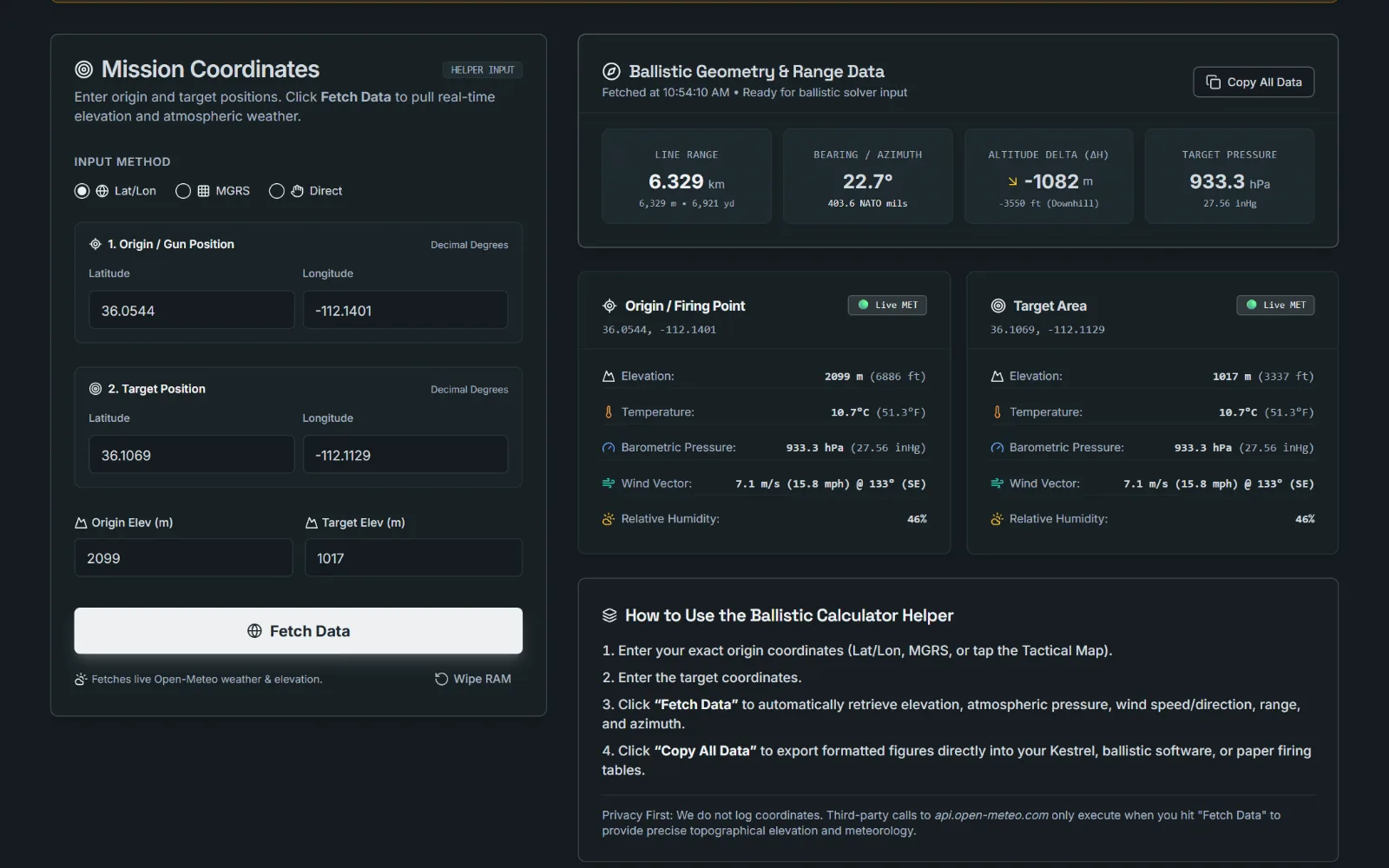
KillCalculator.com: a privacy-first field data app
The same target this experiment probed — a zero-storage web app that runs its AI on the user's own device.
Read the case study →Building something at the edge of what AI can do?
I'm looking for the next hard problem — to work on, or to work for. Tell me what you're building.